


|
|||||||


|


|
|
 |
|
|
Strumenti |
 03-03-2010, 00:07
|
#1 |
|
Bannato

Iscritto dal: Aug 2001
Città: Berghem Haven
Messaggi: 13528
|
Re-inventato il transistor senza giunzione p-n!
Titolo un po' ad effetto ma sta bene
 http://physicsworld.com/cws/article/news/41881 Researchers in Ireland have succeeded in making the first junctionless transistor ever. The device, which resembles a structure first proposed way back in 1925 but not realized until now, has nearly "ideal" electrical properties, according to the team. It could potentially operate faster and use less power than any conventional transistor on the market today. Transistors are the fundamental building blocks of modern electronic devices – and all existing transistors contain semiconductor junctions. The most common type of junction is the p–n junction, which is formed by the contact between a p-type piece of silicon – doped with impurities to create an excess of holes – and an n-type piece of silicon, doped to create an excess of electrons. Other junctions include the heterojunction, which is simply a p–n junction containing two different semiconductors, and the Schottky junction between metal and semiconductor. The number of transistors on a single silicon microchip has been increasing exponentially since the early 1970s, and has gone up from a few hundred to over several billion today. As a result, transistors are becoming so tiny that it is becoming increasingly difficult to create high-quality junctions. In particular, it is very difficult to change the doping concentration of a material over distances shorter than about 10 nm. Junctionless transistors could therefore help chipmakers continue to make smaller and smaller devices. Patented in 1925 Now, Jean-Pierre Colinge and colleagues at the Tyndall National Institute of University College Cork have dispensed with the very idea of a junction and instead have turned to a concept first proposed in 1925 by Austrian-Hungarian physicist Julius Edgar Lilienfield. Patented under the title "Device for controlling electric current", it is a simple resistor and contains a gate that controls the density of electrons and holes, and thus current flow. The team's version of the device consists of a silicon nanowire in which current flow is perfectly controlled by a silicon gate that is separated from the nanowire by a thin insulating layer. The structure itself is very simple, looking a bit like a telephone cable that is fixed to a surface by a plastic clip (see figure). Crucially, there is no need to alter the doping over very short distances. Instead, the entire silicon nanowire is heavily n-doped, making it an excellent conductor. However, the gate is p-doped and its presence has the effect of depleting the number of electrons in the region of the nanowire under the gate. If a voltage is simply applied along the nanowire, current cannot flow through this depleted region. According to Colinge, this region "squeezes" the current in the nanowire in the same way as the flow of water in a hose is stopped by squeezing it. However, if a voltage is applied to the gate, the squeezing effect is reduced and current can flow. The team also made a similar device with a p-type nanowire and n-type gate. The most perfect of transistors The structure is simple to build, even at the nanoscale, which means reduced costs compared with conventional junction fabrication technologies, which are becoming more and more complex. The device also has near-ideal electrical properties, adds Colinge, and behaves like the most perfect of transistors. This means that it hardly suffers at all from current leakage – the bane of conventional devices – and so could potentially operate faster and using less energy. The Tyndall team says that it is now talking to some of the world's leading semiconductor companies to further develop and possibly license its technology. "Although the idea of a transistor without junctions may seem quite unorthodox, the word "transistor" does not imply the presence of junctions, per se," write the researchers in Nature Nanotechnology, where the work was published. "A transistor is a solid-state device that controls current flow and the word transistor is a contraction of 'trans-resistor'." |

|

|
|
03-03-2010, 08:27
|
#2 |
|
Senior Member

Iscritto dal: Oct 2005
Città: Varesotto
Messaggi: 440
|
Hanno reinventato il MOS?
__________________
Blade server: AMD Athlon AM2 BE-2400, Termaltake TR2-R1, Asrok Nforce7(Geforce 7050), 2x2GB Geil DDRII-800, Antec EA-380, Samsung 250Gb SataII, Samsung 1TB SataII, Pioneer 216, Auzenteck Prelude X-Fi, Case Antec SOLO, Monitor lcd Samsung 244T 24" widescreen |
|
|
|
|
03-03-2010, 09:47
|
#3 |
|
Senior Member

Iscritto dal: May 2006
Messaggi: 7413
|

__________________
If you wanna make the world a better place, take a look at yourself and then make a change. MJ |
|
|
|
|
03-03-2010, 13:34
|
#4 |
|
Member

Iscritto dal: Feb 2009
Città: Biellese
Messaggi: 85
|
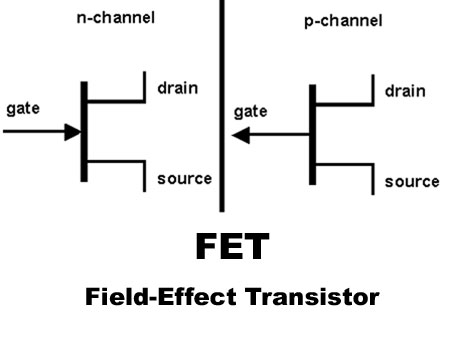
Praticamente ricorda il...
|
|
|
|
|
03-03-2010, 14:39
|
#5 | |
|
Senior Member

Iscritto dal: Jan 2006
Città: Vergate Sul Membro (MI)
Messaggi: 16538
|
Quote:
il risultato è lo stesso di un mosfet a canale (n oppure p)... poi va da se che anche in questo campo il marketing è tutto... |
|
|
|
|


|
03-03-2010, 22:55
|
#6 | |
|
Senior Member

Iscritto dal: May 2008
Messaggi: 622
|
Quote:

|
|
|
|
|
|
04-03-2010, 17:49
|
#7 | |
|
Senior Member
Iscritto dal: May 2008
Messaggi: 622
|
Quote:
|
|
|
|
|
|
05-03-2010, 12:29
|
#8 |
|
Senior Member

Iscritto dal: Feb 2007
Messaggi: 1020
|
scusate ma nello specifico l'ossido che usa tra il gate e il silicio qual è? lo dice nell'articolo?
|
|
|
|
|
06-03-2010, 17:06
|
#9 | |
|
Member
Iscritto dal: Feb 2009
Città: Biellese
Messaggi: 85
|
Quote:
Il controllo del passaggio della corrente è determinato dall'applicazione di un potenziale su un terminale e il dettaglio della presenza dell'ossido è irrilevante tant'è che il mosfet (che ha un ossido) e il fet(che non ce l'ha) agiscono sul canale di conduzione attraverso lo stesso principio. |
|
|
|
|
|
|


| Strumenti | |


|
|

Tutti gli orari sono GMT +1. Ora sono le: 14:25.