


|
|||||||


|


|
|
 |
|
|
Strumenti |
 25-06-2004, 09:35
|
#141 | ||
|
Senior Member

Iscritto dal: Nov 2001
Città: Padova
Messaggi: 1638
|
Quote:
Allora vorrei sapere per te che vuol dire spendere 4 miliardi l'anno solo per la gestione degli Shuttle... E poi, hai idea della quantità di missioni scientifiche sul sistema solare e il resto dell'universo (Deep Space Program) che sono in atto da parte delle due principali agenzia spaziali del mondo? Rosetta, Deep Impact, Soho, SST, HST, JWST, MESSENGER, CASSINI-HYUGENS, etc. etc.? Quote:
Oltretutto, si sta cercando non tanto acqua allo stato di permafrost (come è stata trovata prima per deduzione da parte di Mars Global Survejor, e poi per analisi diretta da Mars Express), magari mischiata con CO2 ai due poli, ma allo stato LIQUIDO, imprigionata (è assai probabile) sotto la crosta marziana. Questo è proprio il compito del radar MARSIS.
__________________
Cosmos Pure | Core i7 860 | P7P55D-E Deluxe | 16GB DDR3 Vengeance | HD5850 | 2x850PRO 256GB | 2xRE3 250GB | 2xSpinPoint F3 1TB |
||

|

|
|
25-06-2004, 11:21
|
#142 |
|
Senior Member

Iscritto dal: Oct 2000
Città: UK
Messaggi: 7458
|
Certo che criticare le scoperte fatte senza nemmeno sapere quali strumenti sono a bordo delle sonde...

__________________
"Questo forum non è un fottuto cellulare quindi scrivi in italiano, grazie." (by Hire)  Le mie foto su Panoramio - Google Earth |
|
|
|
|
22-08-2004, 10:14
|
#143 |
|
Senior Member
Iscritto dal: Nov 2001
Città: Padova
Messaggi: 1638
|
International interplanetary networking from Mars
MISSION CONTROL REPORT Posted: August 18, 2004 One of NASA's Mars rovers has sent pictures relayed by the European Space Agency's Mars Express orbiter for the first time, demonstrating that the orbiter could serve as a communications link if needed. The link-up was part of a set of interplanetary networking demonstrations paving the way for future Mars missions to rely on these networking capabilities. The American and European agencies planned them as part of continuing efforts to cooperate in space exploration. On Aug. 4, as Mars Express flew over NASA's Mars Exploration Rover Opportunity, the orbiter received data previously collected and stored by the rover. The data, including 15 images from the rover's nine cameras, were subsequently forwarded to the European Space Operations Centre, Darmstadt, Germany, and immediately relayed to the rover team based at NASA's Jet Propulsion Laboratory, Pasadena, Calif. Mars Express also is demonstrating two other networking modes with Opportunity and the twin rover, Spirit, between Aug. 3 and Aug. 13. Two NASA orbiters, Mars Odyssey and Mars Global Surveyor, have relayed most data the rovers have produced since they landed in January. In addition, Mars Express demonstrated communication compatibility with the rovers in February, but at a low rate that did not convey much data. The Aug. 4 session, receiving 42.6 megabits from Opportunity in about 6 minutes, set a new mark for international networking at another planet. The ability for a European mission and a NASA mission to communicate with each other at Mars required years of groundwork on Earth, said JPL engineer Peter Shames. Both Mars Express and the rovers use a communications protocol called Proximity-1. The Consultative Committee for Space Data Systems, an international partnership for standardizing techniques used for handling space data, developed Proximity-1. Mars Express was 1,400 kilometers (870 miles) above Mars' surface during the Aug. 4 session with Opportunity. In that session, the goal was reliable transfer of lots of data. The orbiter was about four times higher when it listened to Spirit on Aug. 3 and Aug. 6. Those sessions demonstrated a mode useful for catching fewer bits of a weaker signal during critical events, such as a landing or an approach to another craft for a rendezvous in orbit. The final session of the series, scheduled for Aug. 13 with Opportunity, was to demonstrate a mode for gaining navigational information from the Doppler shift in the radio signal. "Establishing a reliable communication network around Mars or other planets is crucial for future exploration missions," said Con McCarthy of the European Space Agency's Mars Express project. "This will allow ESA and NASA to more accurately track spacecraft during their approach, atmospheric entry and even descent, as well as to increase the coverage and the amount of data that can be brought back to Earth." "We're delighted how well this has been working, and thankful to have Mars Express in orbit," said JPL's Richard Horttor, project manager for NASA's role in Mars Express. JPL engineer Gary Noreen of the Mars Network Office said, "The capabilities that our international teamwork is advancing this month could be important in future exploration of Mars." JPL's Dr. Mark Adler, Mars Exploration Rover mission manager, said, "A lot of the people who have worked on the Mars Exploration Rovers will be working on future Mars missions or have already switched to working on future missions, so we are very glad to see these capabilities demonstrated." JPL, a division of the California Institute of Technology in Pasadena, manages the Mars Exploration Rover Project for NASA's Science Mission Directorate, Washington.
__________________
Cosmos Pure | Core i7 860 | P7P55D-E Deluxe | 16GB DDR3 Vengeance | HD5850 | 2x850PRO 256GB | 2xRE3 250GB | 2xSpinPoint F3 1TB |
|
|
|
|
24-08-2004, 13:27
|
#144 |
|
Senior Member
Iscritto dal: Oct 2000
Città: UK
Messaggi: 7458
|
http://www.space.com/scienceastronom...ne_040824.html
Scientists Seek Scent of Life in Methane at Mars By Leonard David Senior Space Writer posted: 24 August, 2004 07:00 a..m. ET Sniffing out any whiff of biology on Mars has become a scientific battle of the bands – spectral bands that is. The purported detection of methane in the martian atmosphere by Mars Express, the European Space Agency (ESA) probe now orbiting the red planet, has sparked measurable debate. ESA announced late last March that the Mars Express Planetary Fourier Spectrometer (PFS) had observed methane. That instrument is built to detect the presence of particular molecules by analyzing their 'spectral fingerprints' - the specific way each molecule absorbs the sunlight it receives. While the amount of methane seen by the PFS is very small – about 10 parts in a thousand million – the implications of the detection are large. Perhaps Mars isn’t a planet waiting to exhale, but one that is a thriving world of panting microbes? According to ESA experts, methane, unless it is continuously produced by a source, only survives in the martian atmosphere for a few hundreds of years because it quickly oxidizes to form water and carbon dioxide - both present in the martian atmosphere. So what’s refilling the atmosphere with methane? Methane measurements On the one hand, methane production could be linked to volcanic or hydrothermal activity on Mars, although no volcanic activity has been detected on the planet to date. Alternatively, many types of microbes produce a signature of methane. On Earth, methane is a by-product of biological activity, such as fermentation. Biological sources, such as those associated with peat bogs, rice fields and cud-chewing animals constantly supply fresh gas to replace that destroyed by oxidation. "The first thing to understand is how exactly the methane is distributed in the martian atmosphere," says Vittorio Formisano, principal investigator for the PFS instrument at the Istituto Fisica Spazio Interplanetario in Rome, Italy. "Since the methane presence is so small, we need to take more measurements. Only then will we have enough data to make a statistical analysis and understand whether there are regions of the atmosphere where methane is more concentrated," Formisano explained in an ESA press statement. Ground-based looks Adding to the Mars Express methane saga are reports from scientists using ground-based telescopes that, indeed, traces of the gas have also been spotted. One independent U.S. team, led by Michael Mumma of NASA’s Goddard Space Flight Center in Greenbelt, Maryland, has also weighed in on the methane on Mars question. Mumma reported last year at the American Astronomical Society’s Division for Planetary Sciences that methane had been detected using super-sensitive infrared spectrometers mounted to the Gemini South telescope on Cerro Pachón in Chile and at the W.M. Keck Observatory on Mauna Kea, Hawaii. The bottom line, Mumma said, is that sorting out the signature of methane is not an easy task. "I've looked at some of the PFS spectra in the methane region, and am skeptical," Mumma said. "I think they have not yet convinced the community they are detecting CH4 (methane)." More work is needed to model and strip out the spectra from known constituents within the martian atmosphere, and then compare the residuals with synthesized CH4 spectra, Mumma said. At this point in time, "the community has reserved judgment on the PFS results," he concluded. Near the limits of detection There’s no doubt that detecting methane eking out of Mars would be extremely important if true. The implication, if it turns out to be really there, is that the methane can only be produced by some active process that churns out new methane - such as volcanic activity or certain types of living organisms: methanogens. A methanogen is a microorganism that produces methane from the reaction of hydrogen and carbon dioxide. "In either case, we would have discovered that Mars is an active planet today," said Benton Clark, a Mars Exploration Rover team scientist from Lockheed Martin Space Systems Company, Denver, Colorado. "Localizing the source would be of great interest and would point to future exploration." However, measurements taken to date from Earth and by the Mars Express can be challenged because they are near the limits of detection, Clark told SPACE.com. Taking to the air Clark said that the proposed NASA Mars Volcanic Emission and Life (MARVEL) Scout mission would detect methane with 100 to 1000 times better sensitivity from orbit, and also be able to localize it on the red planet. In addition, taking to the air – by literally flying over the martian surface -- is another way to spot methane. For example, Clark said, a proposed Mars airplane, the Aerial Regional-scale Environmental Survey (ARES), is under the wing of NASA's Langley Research Center in Hampton, Virginia. It is designed to tote instruments that can target methane and other gases for measurement as it flies over red planet real estate. "I think too much has been written about these [Mars Express] observations in the press in the absence of formal scientific review," said Mark Allen, an Earth and planetary atmospheres Research scientist in the Earth and Space Sciences Division at the Jet Propulsion Laboratory (JPL) in Pasadena, California. He is also the principal investigator for the proposed MARVEL Scout. Without peer reviewed assessments of the Mars Express findings, Allen said, any comment on the observations would be premature. "At best these observations are tantalizing, since the experiment seems to be operating at the limit of its sensitivity. However, the implications for extant habitability and inhabitance of Mars are tremendous," Allen said. "I would hope that NASA is interested in pursuing this subject and might find a mission with much more sensitivity and capability for locating surface point sources -- such as MARVEL -- highly attractive for selection next time," he suggested. Proceed with caution Also in the still to be convinced category in regards to the Mars Express methane finding is James Garvin, NASA Chief Scientist for Mars and the Moon, in the Science Mission Directorate at NASA Headquarters, Washington, D.C. "Most of what we have seen from the Mars Express PFS does not yet suggest that it is wholly reproducible and even localizable," Garvin suggested. His advice, as a NASA scientist steeped in ever-growing volumes of new Mars data: proceed with caution, examine multiple lines of detection and then the basic chemistry of the processes - before leaping to conclusions. Garvin noted that the PFS on Mars Express is an outstanding Fourier spectrometer which could, under appropriate circumstances, detect methane at 10's of parts per billion levels - but across a large control volume of the martian atmosphere which is relatively well mixed. There is far more evidence, Garvin continued, for the possibility of recent, highly localized volcanism -- as fumaroles or local hydrothermal vents -- than for anything to do with subsurface microbial systems. "If you were to ask me, any methane we may be seeing must be volcanogenic on the basis of what scant real scientific evidence we have... or it could even be some sort of ‘oddball’ result of asteroidal impact that we have not fully understood," Garvin speculated. Looking to the future, Garvin pointed to the launchings of NASA’s Mars Reconnaissance Orbiter in 2005, the Phoenix lander in 2007, and the wheeled Mars Science Laboratory in 2009. Each will help puzzle out further the red planet’s past history and present-day condition. And each will, at least in part, address the existence of disequilibrium trace gases – such as methane – using new approaches, including on-the-spot mass spectrometry, he said.
__________________
"Questo forum non è un fottuto cellulare quindi scrivi in italiano, grazie." (by Hire) Le mie foto su Panoramio - Google Earth |
|
|
|
|
23-09-2004, 23:18
|
#145 |
|
Senior Member
Iscritto dal: Nov 2001
Città: Padova
Messaggi: 1638
|
A new clue from Mars?
EUROPEAN SPACE AGENCY NEWS RELEASE Posted: September 20, 2004 Recent analyses of ESA's Mars Express data reveal that concentrations of water vapour and methane in the atmosphere of Mars significantly overlap. This result, from data obtained by the Planetary Fourier Spectrometer (PFS), gives a boost to understanding of geological and atmospheric processes on Mars, and provides important new hints to evaluate the hypothesis of life present on the Red Planet. PFS observed that, at 10-15 kilometres above the surface, water vapour is well mixed and uniform in the atmosphere. However, it found that, close to the surface, water vapour is more concentrated in three broad equatorial regions: Arabia Terra, Elysium Planum and Arcadia-Memnonia. Here, the concentration is two to three times higher than in other regions observed. These areas of water vapour concentration also correspond to the areas where NASA's Odyssey spacecraft has observed a water ice layer a few tens of centimetres below the surface, as Dr Vittorio Formisano, PFS principal investigator, reports. New in-depth analysis of PFS data also confirms that methane is not uniform in the atmosphere, but concentrated in some areas. The PFS team observed that the areas of highest concentration of methane overlap with the areas where water vapour and underground water ice are also concentrated. This spatial correlation between water vapour and methane seems to point to a common underground source. Initial speculation has taken the underground ice layer into account. This could be explained by the 'ice table' concept, in which geothermal heat from below the surface makes water and other material move towards the surface. It would then freeze before getting there, due to the very low surface temperature (many tens of degrees Celsius below zero). Further investigations are needed to fully understand the correlation between the ice table and the presence and distribution of water vapour and methane in the atmosphere. In other words, can the geothermal processes which 'feed' the ice table also bring water vapour and other gases, like methane, to the surface? Can there be liquid water below the ice table? Can forms of bacterial life exist in the water below the ice table, producing methane and other gases and releasing them to the surface and then to the atmosphere? The PFS instrument has also detected traces of other gases in the Martian atmosphere. A report on these is currently under peer review. Further studies will address whether these gases can be linked to water and methane and help answer the unresolved questions. In-situ observations by future lander missions to Mars may provide a more exhaustive solution to the puzzle. The result is reported Monday, by Dr Vittorio Formisano at the International Mars Conference (19-23 September), organised by the Italian Space Agency (ASI) in Ischia, Italy. The objective of the PFS instrument is the study, with unprecedented spectral resolution, of temperature fields in the atmosphere, dust, variation and cycle of water and carbon monoxide, vertical distribution of water, soil-atmosphere interactions and minor gaseous species. From this, hints of extant life can be extracted (in terms of the presence of 'biomarker' gases and chemical study of atmospheric environmental conditions). The PFS is an Italian Space Agency instrument, developed by the Istituto di Fisica dello Spazio Interplanetario (IFSI) of the Istituto Nazionale di Astrofisica (INAF), in the framework of ESA Mars Express mission.
__________________
Cosmos Pure | Core i7 860 | P7P55D-E Deluxe | 16GB DDR3 Vengeance | HD5850 | 2x850PRO 256GB | 2xRE3 250GB | 2xSpinPoint F3 1TB |
|
|
|
|
09-10-2004, 15:52
|
#146 |
|
Senior Member
Iscritto dal: Nov 2001
Città: Padova
Messaggi: 1638
|
Da Newscientist.com:
Mars Express 'divining rod' mission delayed 18:33 08 October 04 NewScientist.com news service A spindly radar antenna - which could discover underground water on Mars - will now not deploy on Europe's Mars Express spacecraft until at least March 2005, say mission scientists. That represents about a year's delay for the experiment, which has been postponed repeatedly over concerns that the 40-metre-long antenna could smack into the spacecraft on deployment. The main antenna for MARSIS (Mars Advanced Radar for Subsurface and Ionosphere Sounding) consists of wires strung inside two 20-metre-long fibreglass tubes the width of a shower rail. It will act as a divining rod, scouting for water as deep as several kilometres below ground. The folded tubes had been scheduled to pop out of opposite ends of a storage box on the side of the orbiter in April 2004. This was postponed after computer simulations of a similar antenna called Sharad - due to be launched to Mars on NASA's Mars Reconnaissance Orbiter in August 2005 - suggested the cold temperatures of space could boost the springiness of the antennae. This could make the segments swing out and snap backwards - hitting the craft or wrapping around crucial components. Impact probability Until recently, scientists hoped MARSIS would deploy in late November. But European Space Agency (ESA) officials have now postponed this until March at the earliest after meeting with NASA, which is managing the project, on 5 October. "In order for us to say this is benign, or there's a particular probability of impact, we have to do more analyses," says MARSIS manager William Johnson, a physicist at NASA's Jet Propulsion Laboratory (JPL) in Pasadena, California. Scientists at NASA and at the antenna's manufacturer, Astro Aerospace of Carpinteria, California, expect to finish physical tests of the antenna within days. Several weeks of computer modelling - incorporating the test results - will follow. ESA should then issue a verdict on when they will deploy MARSIS, if at all. The test results so far have been mixed. Using samples of the antenna tubing and a full-scale MARSIS model that had been folded up since before the mission launched in June 2003, the team conducted vacuum-chamber tests down to -100 °C. Mixed results They found, to their delight, that the antenna sprang out with less energy than expected. But it also buckled more easily, making the exact behaviour of the deployment tricky to predict. Johnson says the antenna will extend to its full length in several seconds and take about 30 seconds to settle into relative stability before swinging slowly for several minutes. Ongoing simulations will provide estimates of how often the antenna is likely to hit the spacecraft. But each 20-m tube weighs less than 1 kilogram. "So even if it hit very hard, it probably wouldn't hurt anything," Johnson told New Scientist. "But probably isn't good enough." "Everybody is rooting for us to get the experiment started, but we're being prudent," says experiment co-leader Jeff Plaut of NASA's JPL. Gaping canyons "It holds the promise of changing the way we think about Mars," he adds. Nearly all of the water detected on Mars to date is locked in polar ice which, if spread evenly over the planet, would be just a few tens of metres deep. But gaping canyons and other features seemingly carved by ancient water suggest the hypothetical layer was once 1 to 2 kilometres deep. Plaut says: "One of the overarching questions for Mars is: where did all that water go?" While some water was likely lost to space, the rest may be underground. And MARSIS could find it if it lurks within the top 5 km of the crust. The existence of Martian water “has implications for…possible human habitation", Plaut told New Scientist. Colonists could drill wells to tap it, or natural tectonic events could create surface springs. "We know groundwater on Earth is an environment for microorganisms - that ties the work to questions of life as well," Plaut says. March may be the next best opportunity for deployment because, from January until March, Mars Express will swing through the planet's shadow during each six-hour orbit, forcing the craft to rely on battery power - which can fail - rather than solar energy. Maggie McKee
__________________
Cosmos Pure | Core i7 860 | P7P55D-E Deluxe | 16GB DDR3 Vengeance | HD5850 | 2x850PRO 256GB | 2xRE3 250GB | 2xSpinPoint F3 1TB |
|
|
|
|
09-10-2004, 20:01
|
#147 |
|
Senior Member
Iscritto dal: Oct 2000
Città: UK
Messaggi: 7458
|
Oh, credevo che si fossero dimenticati di avere un'antenna da far funzionare...
 Uff, che palle comunque, tocca aspettare ancora... 
__________________
"Questo forum non è un fottuto cellulare quindi scrivi in italiano, grazie." (by Hire) Le mie foto su Panoramio - Google Earth |
|
|
|
|
09-10-2004, 23:45
|
#148 | |
|
Senior Member
Iscritto dal: Nov 2001
Città: Padova
Messaggi: 1638
|
Quote:
  
__________________
Cosmos Pure | Core i7 860 | P7P55D-E Deluxe | 16GB DDR3 Vengeance | HD5850 | 2x850PRO 256GB | 2xRE3 250GB | 2xSpinPoint F3 1TB |
|
|
|
|
|
19-03-2005, 12:03
|
#149 |
|
Senior Member
Iscritto dal: Oct 2000
Città: UK
Messaggi: 7458
|
Mentre non c'è ancora nessuna notizia sui dati raccolti dal radar per il rilevamento dell'acqua, che non ho ancora capito se è in funzione o meno, pare che abbiano trovato un ghiacciaio:
http://www.esa.int/SPECIALS/Mars_Exp...3IRMD6E_0.html 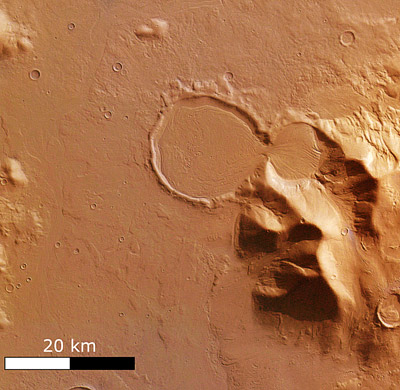
__________________
"Questo forum non è un fottuto cellulare quindi scrivi in italiano, grazie." (by Hire) Le mie foto su Panoramio - Google Earth |
|
|
|
|
03-05-2005, 22:55
|
#150 |
|
Senior Member
Iscritto dal: Nov 2001
Città: Padova
Messaggi: 1638
|
Mars Express radar package to be deployed
NASA/JPL NEWS RELEASE Posted: May 2, 2005 The European Space Agency's Mars Express orbiter will soon deploy its radar instrument for the first time. The instrument is designed to look below the surface of Mars for different layers of material, most notably water. Once the deployment is successful, the Mars Advanced Radar for Subsurface and Ionosphere Sounding (Marsis) instrument will complement the orbiter's study of the planet's atmosphere and surface. The instrument was funded by NASA and the Italian Space Agency and developed by the University of Rome, Italy, in partnership with NASA's Jet Propulsion Laboratory, Pasadena, Calif. The instrument's co-principal investigator, Dr. Jeffrey Plaut of JPL said, "We look forward to the start of the Marsis experiment, and to becoming full partners in the mission of discovery that is Mars Express. The radar gives us two ways to explore the fate of the water that once flowed on the surface of Mars. We will probe beneath the surface for evidence of frozen or liquid reservoirs, and we will study the outer fringes of Mars' atmosphere, where the planet may have lost its water to space." The deployment of the three radar booms will take place in three phases, in a window spanning from May 2 to 12. These operations will be initiated and monitored from the European Space Agency's European Space Operations Centre in Darmstadt, Germany. Each boom will be deployed separately, with the two 20-meter-long (66-foot-long) dipole booms to be unfurled first and the 7-meter (23-foot) monopole boom to follow a few days later. Before each deployment, the spacecraft will be placed in a Œrobust' attitude control mode, which will allow it to tumble freely while the boom extends before regaining standard pointing to the Sun and Earth. The result of each deployment can be assessed only after a series of tests, each taking a few days. After the deployment of the three booms, European Space Agency engineers will start the analysis of the complete behavior of the satellite to be able to confirm the overall success of the operation. The current schedule is subject to change, due to the timing and nature of the complex series of operations. Once deployment is complete, the Marsis instrument will undergo three weeks of commissioning before the start of actual science investigations. This timing coincides with the spacecraft's orbit reaching a favorable position to examine one of the prime targets for radar observations. JPL's Richard Horttor, project manager for NASA's roles in the Mars Express mission, said, "The first data from the radar next month will signal the success of an innovative international partnership." Italy provided the instrument's digital processing system and integrated the parts. The University of Iowa, Iowa City, built the transmitter for the instrument, JPL built the receiver and Astro Aerospace, Carpinteria, Calif., built the antenna. JPL is a division of the California Institute of Technology in Pasadena.
__________________
Cosmos Pure | Core i7 860 | P7P55D-E Deluxe | 16GB DDR3 Vengeance | HD5850 | 2x850PRO 256GB | 2xRE3 250GB | 2xSpinPoint F3 1TB |
|
|
|
|
03-05-2005, 23:44
|
#151 |
|
Senior Member
Iscritto dal: Oct 2000
Città: UK
Messaggi: 7458
|
Era ora... son proprio curioso
 [OT] Gio, oltre ad Alenia e ESA chi c'è nei dintorni che si occupa di spazio? [/OT]
__________________
"Questo forum non è un fottuto cellulare quindi scrivi in italiano, grazie." (by Hire) Le mie foto su Panoramio - Google Earth |
|
|
|
|
04-05-2005, 08:29
|
#152 | |
|
Senior Member
Iscritto dal: Nov 2001
Città: Padova
Messaggi: 1638
|
Quote:
se dici nel nostro paese, ci sono, oltre ai diversi dipartimenti dei principali atenei, l'ASI, Finmeccanica (Alenia Spazio, Alenia Marconi Systems, Telespazio, Galileo Avionica), Altair Engineering, Avio (ex-Fiat Avio) oltre naturalmente a pochissime altre ditte specializzate a supporto. CRF (Centro Ricerche Fiat) e Ferrari sono le uniche altre grosse realtà industriali con un notevole know-how in alcuni aspetti di ingegneria aerospaziale.
__________________
Cosmos Pure | Core i7 860 | P7P55D-E Deluxe | 16GB DDR3 Vengeance | HD5850 | 2x850PRO 256GB | 2xRE3 250GB | 2xSpinPoint F3 1TB Ultima modifica di GioFX : 04-05-2005 alle 08:31. |
|
|
|
|
|
04-05-2005, 08:33
|
#153 | |
|
Senior Member
Iscritto dal: Oct 2000
Città: UK
Messaggi: 7458
|
Quote:
__________________
"Questo forum non è un fottuto cellulare quindi scrivi in italiano, grazie." (by Hire) Le mie foto su Panoramio - Google Earth |
|
|
|
|
|
04-05-2005, 22:23
|
#154 |
|
Senior Member
Iscritto dal: Nov 2001
Città: Padova
Messaggi: 1638
|

__________________
Cosmos Pure | Core i7 860 | P7P55D-E Deluxe | 16GB DDR3 Vengeance | HD5850 | 2x850PRO 256GB | 2xRE3 250GB | 2xSpinPoint F3 1TB Ultima modifica di GioFX : 04-05-2005 alle 22:25. |
|
|
|
|
10-05-2005, 10:12
|
#155 |
|
Senior Member
Iscritto dal: Nov 2001
Città: Padova
Messaggi: 1638
|
Deployment of Mars Express' second radar boom delayed
ESA NEWS RELEASE Posted: May 9, 2005 The deployment of the second antenna boom of the Mars Express Sub-Surface Sounding Radar Altimeter (MARSIS) science experiment has been delayed pending investigation of an anomaly found during deployment of the first antenna boom. The anomaly was discovered on 7 May towards the end of the first deployment operations. Deployment of the first boom started on Wednesday 4 May. The problem with the boom was confirmed by flight control engineers working at ESA's European Space Operations Centre (ESOC) in Darmstadt, Germany, on 7 May, after which further activity was stopped pending a full assessment of the situation. The decision to delay deployment of Boom 2 pending clarification of the situation and implications was made on 8 May. Mission controllers were able to determine that 12 of the 13 boom segments of Boom 1 were correctly locked into position. However, one of the final segments, possibly No. 10, had deployed but was not positively locked into position. It was determined that deployment of the second boom should be delayed in order to determine what implications the anomaly in the first boom may have on the conditions for deploying the second. This decision is in line with initial plans which had allowed for a delay should any anomalous events occur during the first boom deployment. Mission staff will now take the time necessary to investigate the boom situation. Foreseen outcomes include confirming that all segments of Boom 1 have been locked into place and determining how the deployment of Boom 1 may affect that of Boom 2. All efforts will be made to ensure the safety of the spacecraft overall and to minimise any effects on the operations of ongoing science activity on board Mars Express. The MARSIS experiment is to map the Martian sub-surface structure to a depth of a few kilometres. The instrument's 40-metre long antenna booms will send low frequency radio waves towards the planet, which will be reflected from any surface they encounter. MARSIS is one of seven science experiments carried on board Mars Express, one of the most successful missions ever flown to the Red Planet. Mars Express was launched on 2 June 2003 and entered Mars orbit in December 2003.
__________________
Cosmos Pure | Core i7 860 | P7P55D-E Deluxe | 16GB DDR3 Vengeance | HD5850 | 2x850PRO 256GB | 2xRE3 250GB | 2xSpinPoint F3 1TB |
|
|
|
|
10-05-2005, 10:54
|
#156 |
|
Senior Member
Iscritto dal: Oct 2000
Città: UK
Messaggi: 7458
|
E' diventata 'na telenovela...

__________________
"Questo forum non è un fottuto cellulare quindi scrivi in italiano, grazie." (by Hire) Le mie foto su Panoramio - Google Earth |
|
|
|
|
12-05-2005, 08:36
|
#157 |
|
Senior Member
Iscritto dal: Oct 2000
Città: UK
Messaggi: 7458
|
http://www.esa.int/SPECIALS/Mars_Exp...3R5TI8E_0.html
First MARSIS boom successfully deployed 11 May 2005 Thanks to a manoeuvre performed on 10 May 2005 at 20:20 CET, ESA flight controllers have successfully completed the deployment of the first boom of the MARSIS radar on board ESA's Mars Express spacecraft. After the start of the deployment of the first 20-metre boom on 4 May, analysis by flight controllers at ESA’s European Space Operations Centre, Darmstadt, Germany, had shown that although 12 out of the 13 boom segments were in place, one of the outermost segments, possibly No. 10, had deployed but was not locked into position. Deployment of the second (20 m) and third (7 m) booms was suspended pending a full analysis and assessment of the situation. As prolonged storage in the cold conditions of outer space could affect the fibreglass and Kevlar material of the boom, the mission team decided to ‘slew’ (or swing) the 680 kg spacecraft so that the Sun would heat the cold side of the boom. It was hoped that as the cold side expanded in the heat, it would force the unlocked segment into place. After an hour, Mars Express was pointed back to Earth, and contact re-established at 04:50 CET on 11 May. A detailed analysis of the data received showed that all segments had successfully locked and Boom 1 was fully deployed. The operations to deploy the remaining two booms could be resumed in a few weeks, after a thorough analysis and investigation of the Boom 1 deployment characteristics. The Mars Express Sub-Surface Sounding Radar Altimeter (MARSIS) experiment is to map the Martian sub-surface structure to a depth of a few kilometres. The instrument's 40-metre long antenna booms will send low frequency radio waves towards the planet, which will be reflected from any surface they encounter. MARSIS is one of the seven science experiments carried on board Mars Express, one of the most successful missions ever flown to the Red Planet. Mars Express was launched on 2 June 2003 and entered Mars orbit in December 2003.
__________________
"Questo forum non è un fottuto cellulare quindi scrivi in italiano, grazie." (by Hire) Le mie foto su Panoramio - Google Earth |
|
|
|
|
12-05-2005, 09:22
|
#158 |
|
Senior Member
Iscritto dal: Nov 2001
Città: Padova
Messaggi: 1638
|
Riporto l'articolo di SFN.
Mars probe uses solar heating to fix boom glitch BY STEPHEN CLARK SPACEFLIGHT NOW Posted: May 11, 2005 Scientists around the world can breathe easier after engineers devised a fix to lock a 65-foot radar boom in place aboard Europe's Mars Express probe in orbit around the Red Planet.  This artist's concept shows the boom deployment for the Mars Express MARSIS experiment. Credit: ESA Teams at the Mars Express ground control center in Germany had first attempted to deploy the first of three such structures last week. By May 7 * as one boom the so-called "dipole" antenna extended and testing commenced * officials noticed data from the spacecraft indicating that one of 13 segments had not fully locked in place. Controllers determined there was an issue from downlinked telemetry showing disturbances in the performance of the craft's three laser gyroscopes, mission manager Fred Jansen explained. Engineers traced the anomaly to the location around segment 10, and immediately halted the planned operation to extend another 65-foot boom component on the opposite side of the spacecraft. After studying the problem for several days, the ground team commanded Mars Express to turn Tuesday to place the suspect part in sunlight in hopes of allowing heat expansion to nudge the segment into the locked position. As programmed, the spacecraft then began to swing back toward Earth to re-establish radio contact, controllers could confirm on Wednesday that the boom was fully secured. The past few weeks of troubleshooting "slightly" impacted normal science observations with other payloads, Jansen said. "We are already focusing on getting back to science operations as soon as possible." These two antenna booms and another downward-facing 23-foot extension also awaiting deployment make up the joint Italian-American Mars Advanced Radar for Sub-surface and Ionosphere Sounding instrument, or MARSIS. This is the final science payload aboard Mars Express to be activated since the probe arrived at the planet in December 2003. Made of a series of folding fiberglass tubes about 1.5 inches in diameter surrounding electrical and data wiring, the two 65-foot "dipole" booms act as both transmission and reception antennas for radar waves sent deep inside Mars to search for evidence of water. The smaller 23-foot "monopole" extension simply receives and cancels out "clutter signals" to improve the accuracy of the results. Officials had originally expected to have all three antennas deployed by this Friday, but plans now call for a comprehensive review and investigation of the problem uncovered last week to ensure it does not occur again. "This particular failure case was not identified before," said Jansen. Deployments of the two remaining booms could resume over the next few weeks, according to a European Space Agency statement. Three weeks of subsequent commissioning activities will take place before science observations begin. The first-of-its-kind MARSIS instrument works by emitting radio waves toward the surface of Mars and analyzing the beams reflected back to the spacecraft to search for signs of underground reservoirs of liquid water. Today, water does not exist on the surface in its liquid form, but instead is permanently trapped in polar ice caps. Such long antennas are needed for the transmission and reception of radio waves due to the extremely low frequencies and long wavelengths associated with the radar beams. These waves will be able to penetrate the surface up to a depth of up to three miles to search for the signature of water. As the signals are bounced back into space, data will be gathered that could also map out ancient lava flows and other rock boundaries. *** Commento personale: bravi per l'intuizione! 
__________________
Cosmos Pure | Core i7 860 | P7P55D-E Deluxe | 16GB DDR3 Vengeance | HD5850 | 2x850PRO 256GB | 2xRE3 250GB | 2xSpinPoint F3 1TB |
|
|
|
|
12-05-2005, 10:15
|
#159 |
|
Senior Member

Iscritto dal: Nov 1999
Città: Sesto Fiorentino, Firenze
Messaggi: 8444
|
Ho provato a trradurre ma senza esiti positivi per la mia comprensione... cosa avrebbero fatto?
Hanno avuto problemi con le comunicazioni mi pare di aver capito e poi? |
|
|
|
|
12-05-2005, 10:44
|
#160 |
|
Senior Member
Iscritto dal: Oct 2000
Città: UK
Messaggi: 7458
|
No, niente problemi di comunicazione.
Devono spiegare le antenne del radar per scandagliare il sottosuolo, solo che la prima non si era stesa per bene. Hanno girato la sonda verso il sole per riscaldare l'antenna e s'è messa a posto... questo in poche parole...
__________________
"Questo forum non è un fottuto cellulare quindi scrivi in italiano, grazie." (by Hire) Le mie foto su Panoramio - Google Earth |
|
|
|
|
|


| Strumenti | |


|
|

Tutti gli orari sono GMT +1. Ora sono le: 05:27.